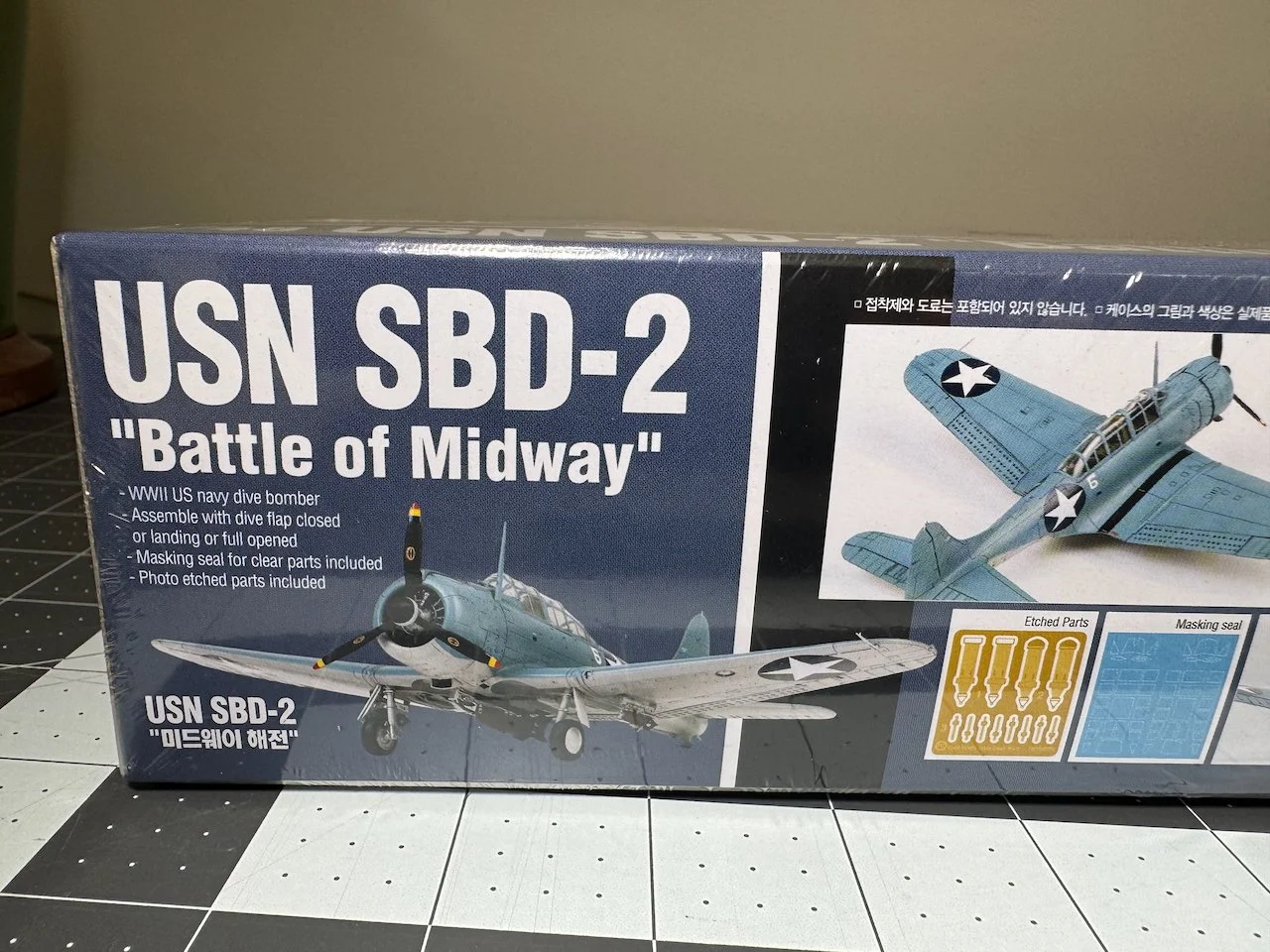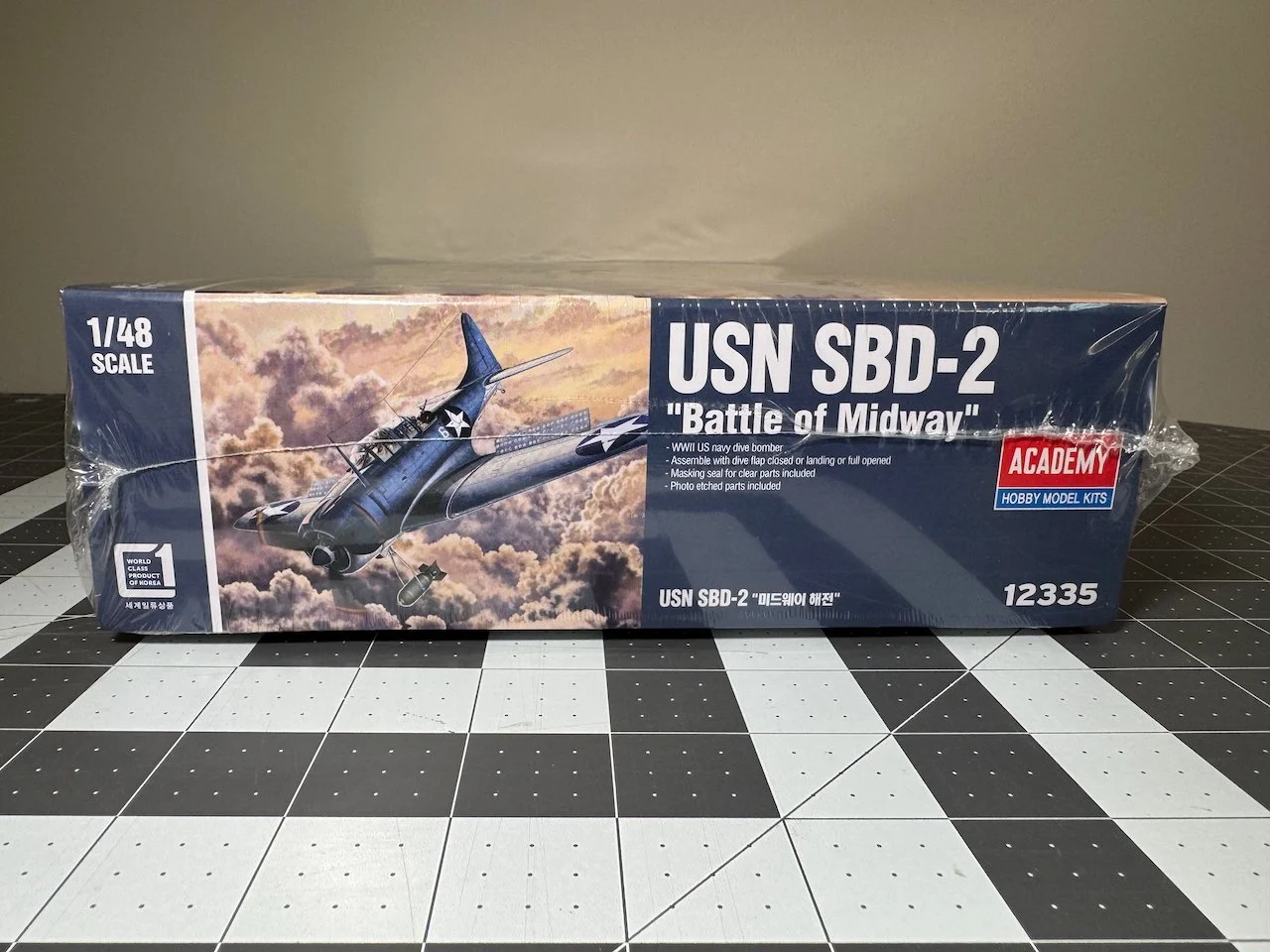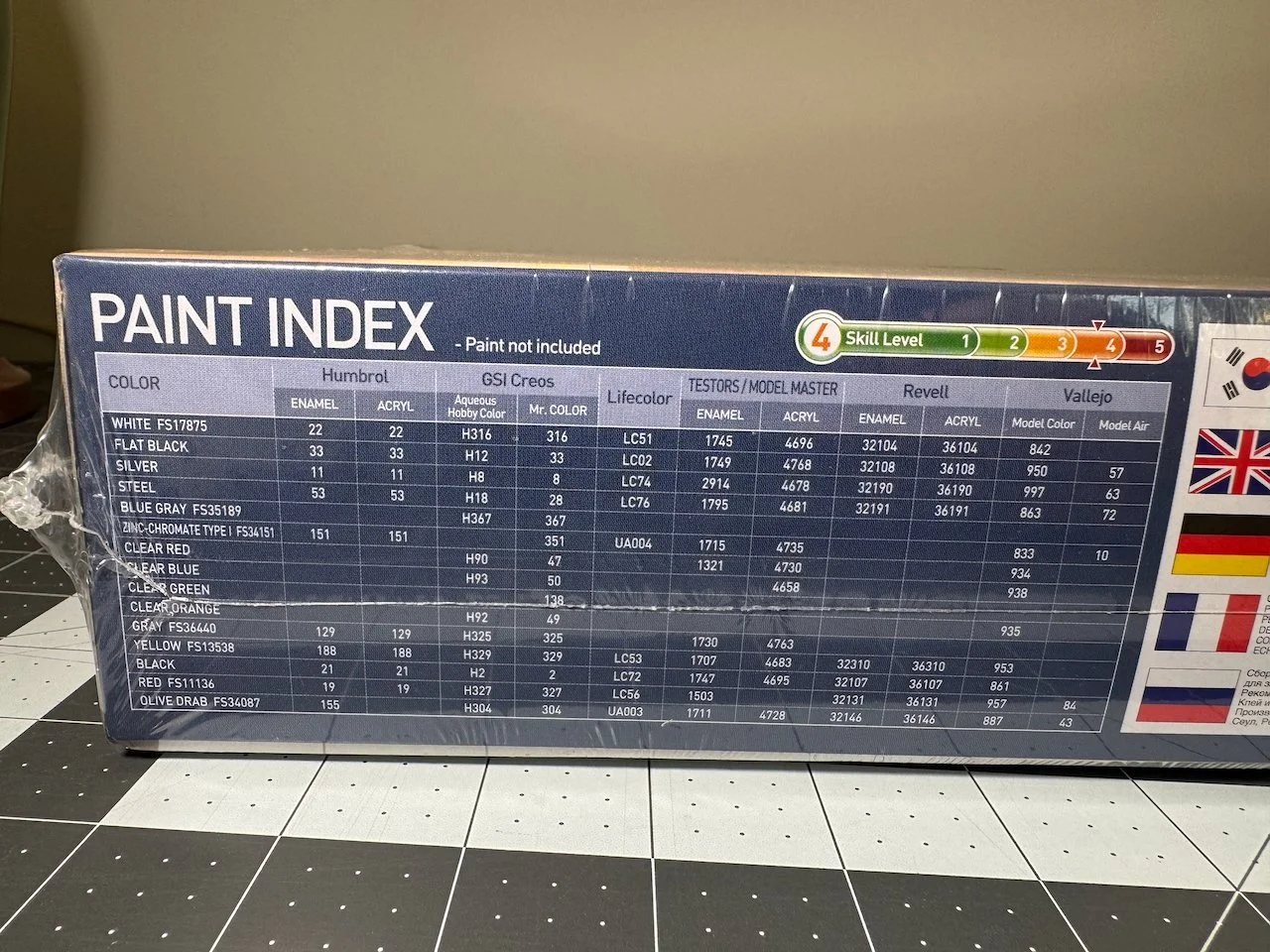
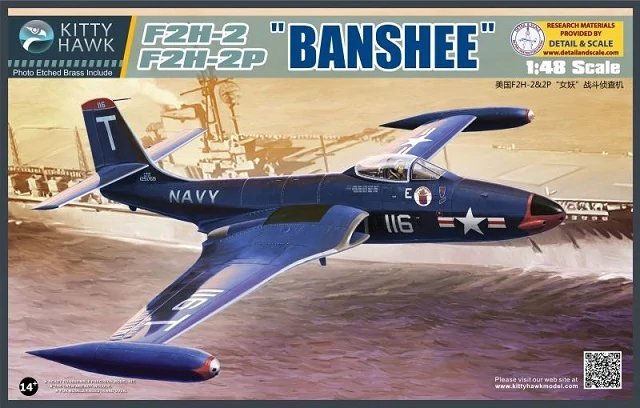
1/48 Kitty Hawk 80131 1/48 F2H-2/F2H-2P Banshee
The Kitty Hawk 80131 1/48 F2H-2 / F2H-2P Banshee is a detailed injection-molded plastic model kit of the U.S. Navy’s early jet-era McDonnell F2H Banshee, offering parts to build either the standard F2H-2 fighter or the F2H-2P photo-reconnaissance variant. Molded in 1/48 scale, the kit features finely engraved panel lines, a well-detailed cockpit, optional open panels, detailed landing gear bays, and clear canopy parts that can be posed open or closed. The reconnaissance version includes camera nose components, while the fighter variant allows typical fleet configurations with external fuel tanks. Designed for intermediate to advanced modelers, the kit benefits from careful dry fitting and thoughtful painting to capture the Banshee’s classic early Cold War Navy schemes. When completed, it builds into an impressive straight-wing carrier jet that represents the transition from piston aircraft to first-generation naval jets.
The F4U Corsair was a formidable combination of speed and firepower and was the mount of numerous aces during WWII. This kit depicts the F4U-1D variant, which was first deployed aboard U.S. Navy aircraft carriers in April 1944. Distinctive features such as the higher pilot seat position, taller tailwheel, and wider propeller blades have been accurately reproduced, and the model may also be assembled with wings folded. A pilot figure, drop tanks, and two types of canopy windshield are included together with markings for three aircraft flown by U.S. aces.