Image 1 of 6
Image 2 of 6
Image 3 of 6
Image 4 of 6
Image 5 of 6
Image 6 of 6
1/35 Lanmo Model WWII US Army Sherman Tank M1A1 Dozer Blade (HVSS) #LM-35005
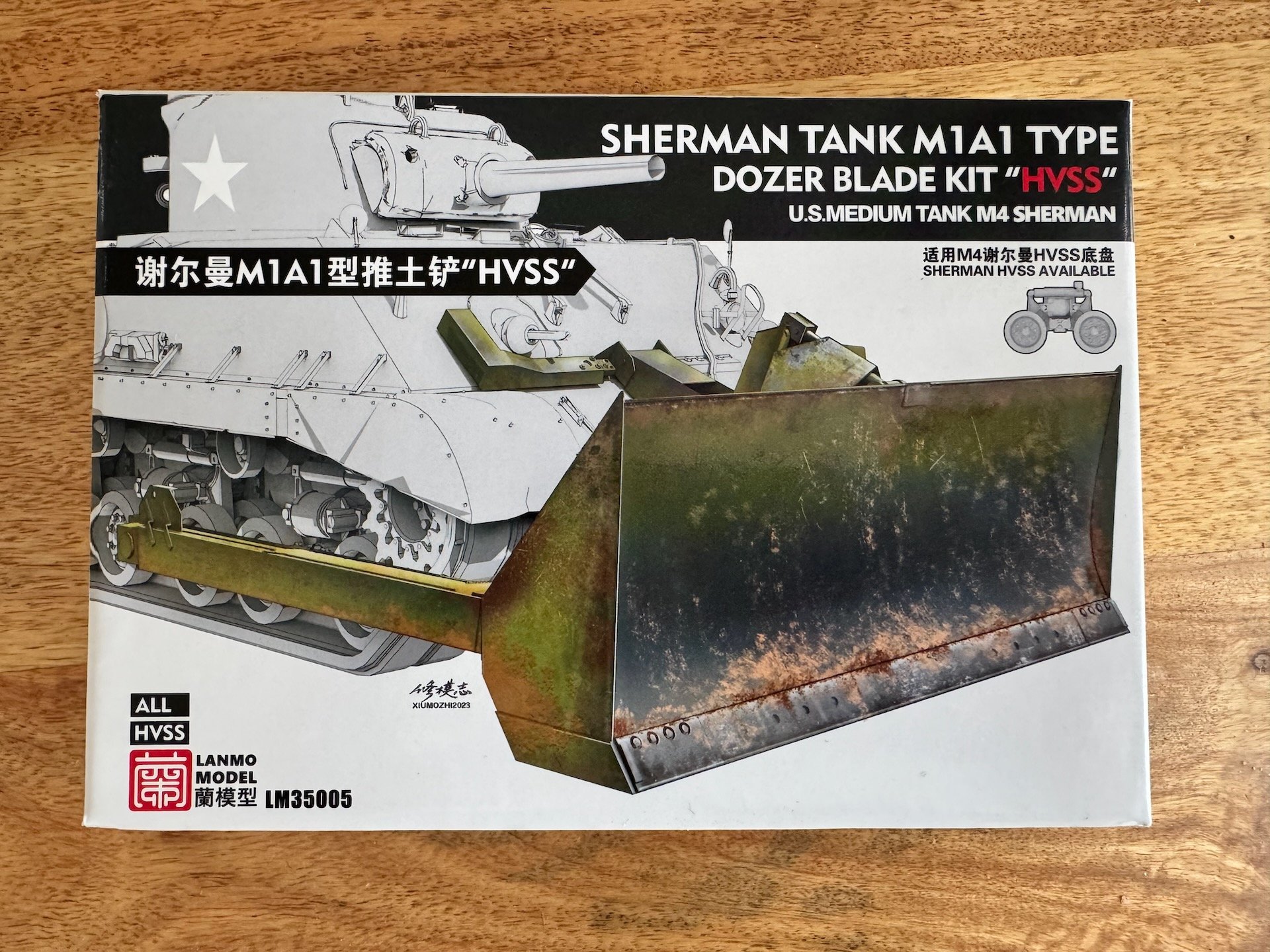
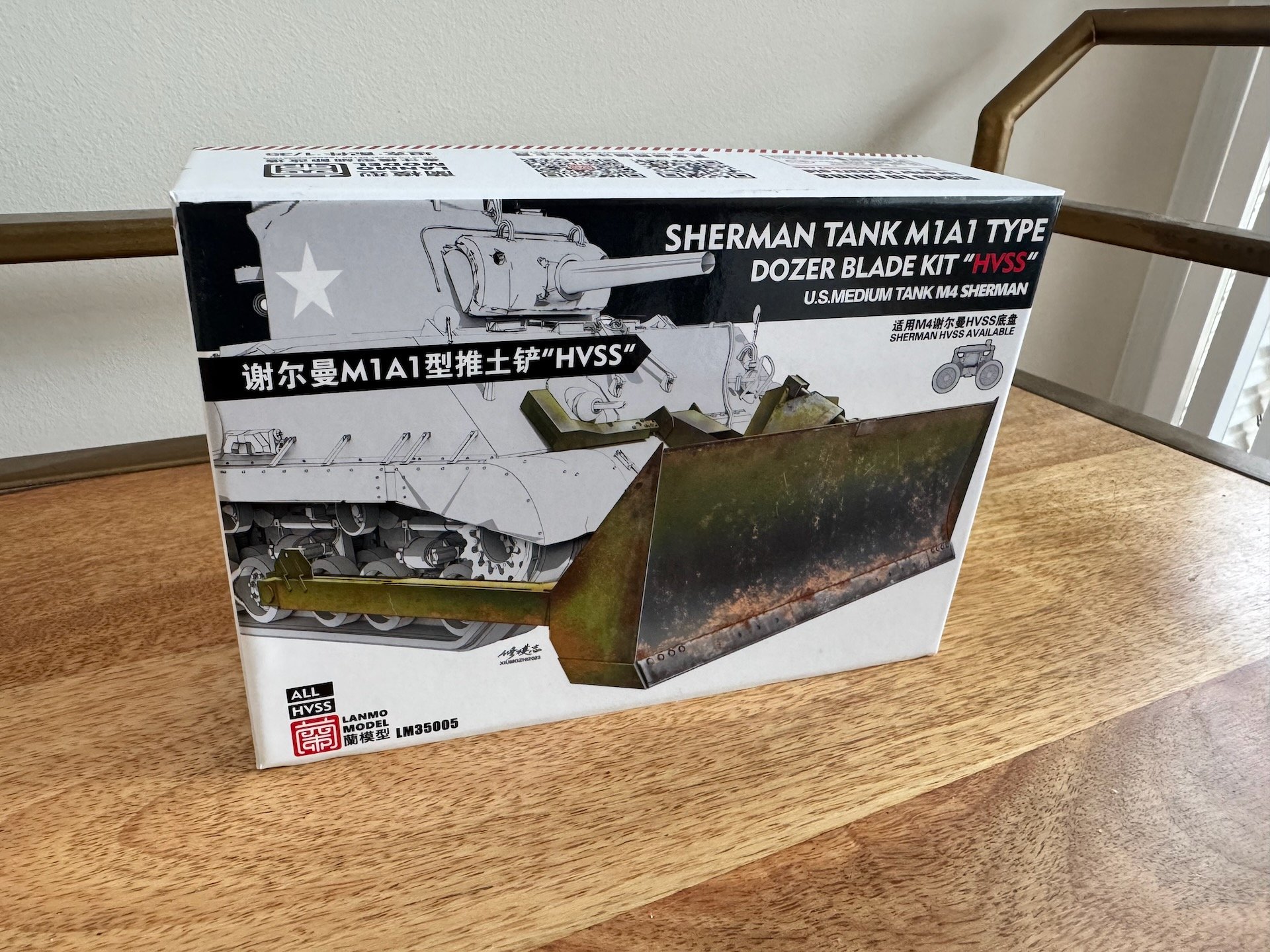
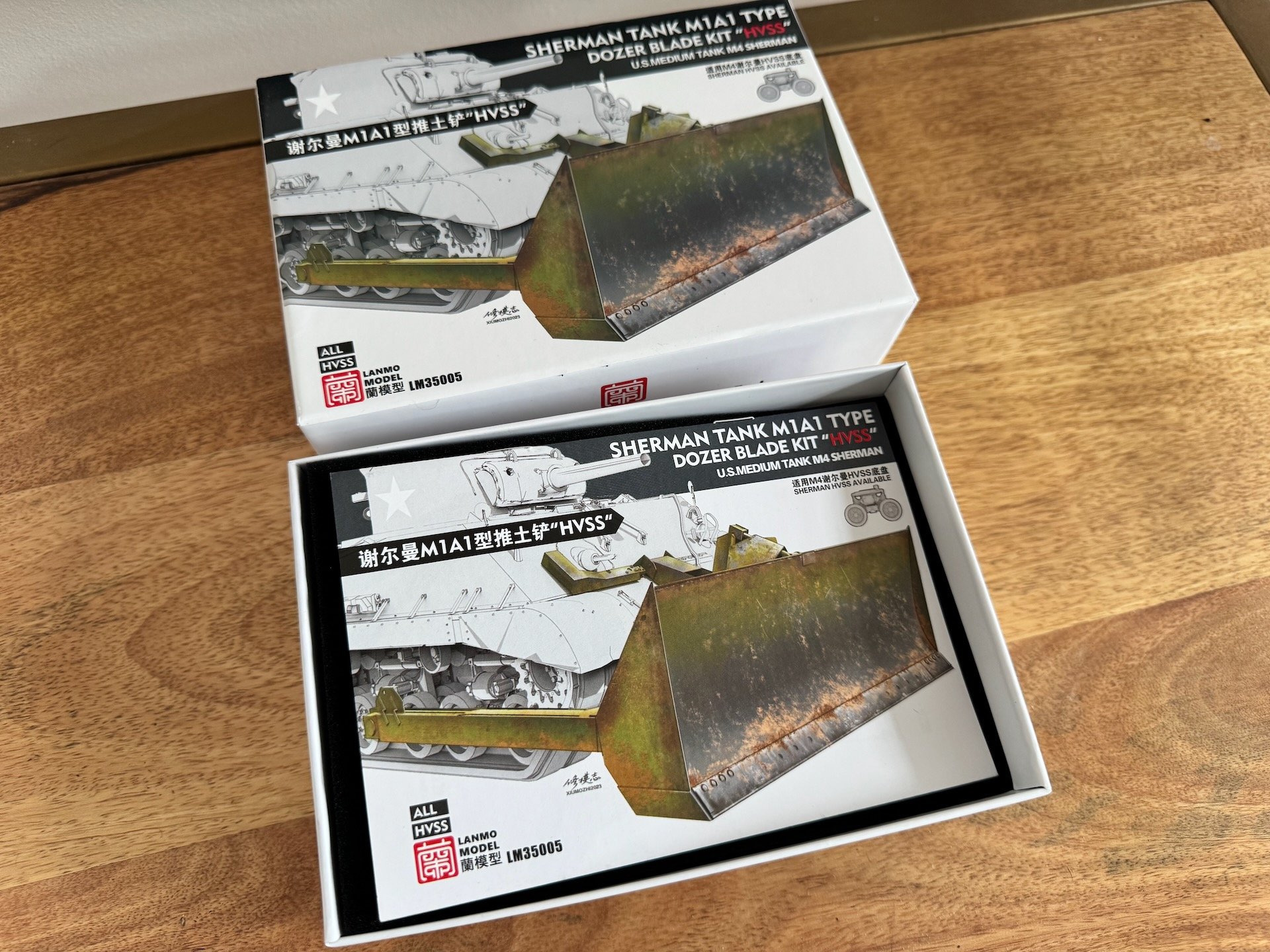
GaelHobbies feature the 1/35 Lanmo Model WWII US Army Sherman Tank M1A1 Dozer Blade (HVSS) #LM-35005
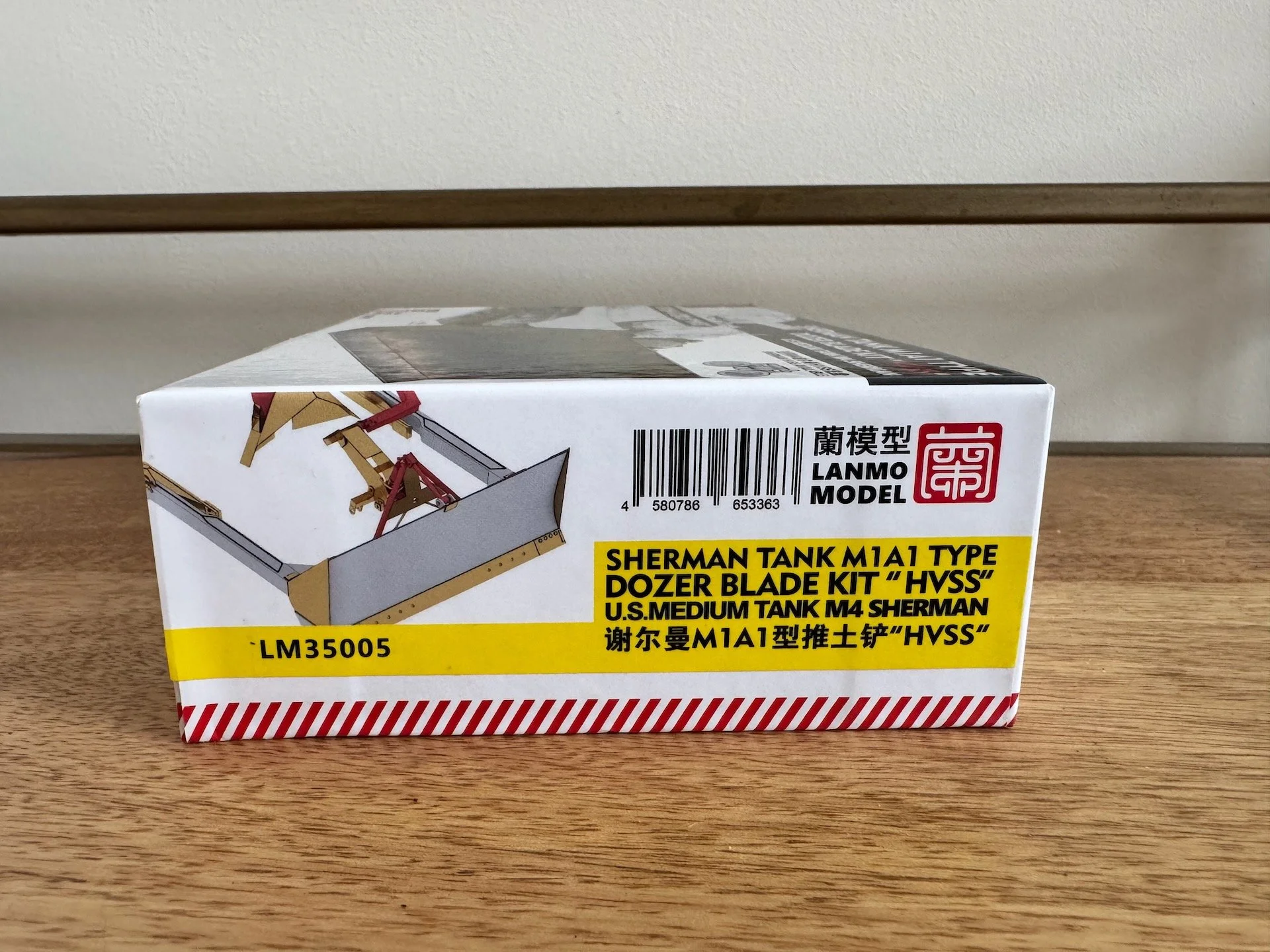
It’s a 1:35-scale model kit from brand LANMO Model with reference number LM35005.
The kit represents a WWII-era U.S. M4 Sherman medium tank equipped with a dozer blade — the “M1A1” variant.
The suspension type is HVSS (Horizontal Volute Spring Suspension), not the earlier VVSS — meaning this model reflects a later production/upgrade version of the Sherman, giving the tank a wider track and more realistic “late-war” stance.
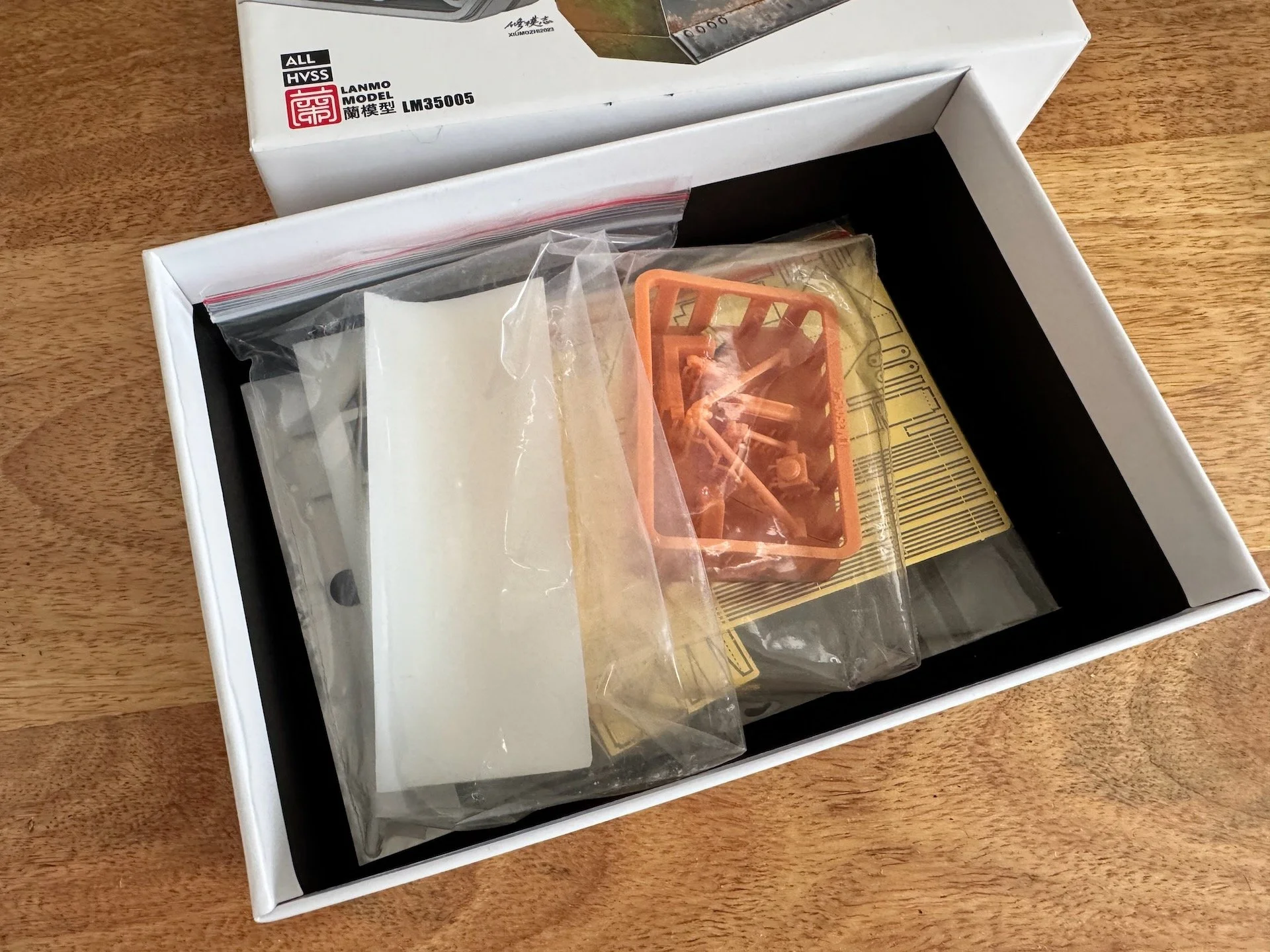
📦 What you get & kit details
The kit is unassembled and unpainted — you will need glue, paints, and possibly extra detail parts (optional) to complete it.
Materials are typically plastic/resin (common for LANMO).
It’s a “detail-up / conversion set” style kit: the dozer blade is meant to be added to a base Sherman tank model, so it’s likely the kit does not include a full tank hull, turret, or tracks — just the dozer blade assembly and related parts to convert an existing HVSS-suspension Sherman into the dozer-equipped variant.
Because of that, you’ll need a compatible 1:35 HVSS-suspension Sherman kit (or a parent kit) to fully build the model.
⚙️ What it represents historically & modeling significance
The dozer blade upgrade (M1A1) was used on Shermans for battlefield engineering — clearing obstacles, earth, debris, fortifications. Including a dozer blade adds realism and historical fidelity to dioramas or wargame-style builds.
The HVSS suspension is a “late-production style”: wider tracks, improved ground pressure and stability — better suited for rough terrain. Using HVSS instead of the older VVSS improves accuracy for late-war / post-war Sherman variants.
🎯 Who this kit is good for
Experienced modelers — because this is a conversion/detail-up kit, not a full “tank-in-a-box.” You need an existing HVSS-Sherman kit (or adaptation skills), painting, weathering, and some scratch-mod skills.
Historical modellers / diorama builders — perfect if you’re aiming for realism: battlefield scenes, engineering-tank display, or alternate-history builds.
Collectors who like detail — adding a dozer blade makes the Sherman stand out from typical builds, giving it a more rugged, utilitarian or “in-action” look.
Builder Note:
⚙️ What VVSS vs HVSS means (real suspension systems)
VVSS (Vertical Volute Spring Suspension):
Uses volute springs mounted vertically inside the bogie/suspension box.
This was the original standard suspension type for many WWII-era US tanks (like early Shermans).
Because the track and wheels are narrower and the suspension travel is more limited, performance on soft terrain (mud, sand) and overall ride smoothness is inferior compared to HVSS.
On a model kit: a VVSS-based kit will usually have narrower tracks and the older-style bogie shape, reflecting early-war vehicles.
HVSS (Horizontal Volute Spring Suspension):
Uses volute springs mounted horizontally between pairs of road-wheel arms (bogies).
Often includes shock absorbers and a wider track (e.g. 23 inch wide track vs narrower on VVSS) — designed to improve ground pressure distribution, stability, and comfort over rough terrain.
Because of the improved ride and better flotation, HVSS became the preferred suspension on later versions of American medium tanks.
On a model kit: HVSS-based kits tend to feature wider tracks, different bogie shapes, and often represent later production tanks or upgraded variants.
🧱 What that means for a modeling kit (like the Lanmo blade kit or tank model)
If your kit uses VVSS, the finished model will resemble an earlier-war tank version — narrower track, simpler bogie, historically appropriate for certain variants.
If your kit uses HVSS, the model will have the later-war (or post-war) style — wider track, more stable stance, and a more “modernized” look matching upgraded tanks.
For accuracy: you should choose based on which historical version of the tank you’re building. Don’t assume HVSS is “better model” — it’s just historically different.
✅ In short: VVSS vs HVSS is a historical & mechanical difference
VVSS = earlier suspension, narrower track, less robust ground handling.
HVSS = upgraded suspension, wider track, better terrain performance & ride quality

GaelHobbies feature the 1/35 Lanmo Model WWII US Army Sherman Tank M1A1 Dozer Blade (HVSS) #LM-35005
It’s a 1:35-scale model kit from brand LANMO Model with reference number LM35005.
The kit represents a WWII-era U.S. M4 Sherman medium tank equipped with a dozer blade — the “M1A1” variant.
The suspension type is HVSS (Horizontal Volute Spring Suspension), not the earlier VVSS — meaning this model reflects a later production/upgrade version of the Sherman, giving the tank a wider track and more realistic “late-war” stance.
📦 What you get & kit details
The kit is unassembled and unpainted — you will need glue, paints, and possibly extra detail parts (optional) to complete it.
Materials are typically plastic/resin (common for LANMO).
It’s a “detail-up / conversion set” style kit: the dozer blade is meant to be added to a base Sherman tank model, so it’s likely the kit does not include a full tank hull, turret, or tracks — just the dozer blade assembly and related parts to convert an existing HVSS-suspension Sherman into the dozer-equipped variant.
Because of that, you’ll need a compatible 1:35 HVSS-suspension Sherman kit (or a parent kit) to fully build the model.
⚙️ What it represents historically & modeling significance
The dozer blade upgrade (M1A1) was used on Shermans for battlefield engineering — clearing obstacles, earth, debris, fortifications. Including a dozer blade adds realism and historical fidelity to dioramas or wargame-style builds.
The HVSS suspension is a “late-production style”: wider tracks, improved ground pressure and stability — better suited for rough terrain. Using HVSS instead of the older VVSS improves accuracy for late-war / post-war Sherman variants.
🎯 Who this kit is good for
Experienced modelers — because this is a conversion/detail-up kit, not a full “tank-in-a-box.” You need an existing HVSS-Sherman kit (or adaptation skills), painting, weathering, and some scratch-mod skills.
Historical modellers / diorama builders — perfect if you’re aiming for realism: battlefield scenes, engineering-tank display, or alternate-history builds.
Collectors who like detail — adding a dozer blade makes the Sherman stand out from typical builds, giving it a more rugged, utilitarian or “in-action” look.
Builder Note:
⚙️ What VVSS vs HVSS means (real suspension systems)
VVSS (Vertical Volute Spring Suspension):
Uses volute springs mounted vertically inside the bogie/suspension box.
This was the original standard suspension type for many WWII-era US tanks (like early Shermans).
Because the track and wheels are narrower and the suspension travel is more limited, performance on soft terrain (mud, sand) and overall ride smoothness is inferior compared to HVSS.
On a model kit: a VVSS-based kit will usually have narrower tracks and the older-style bogie shape, reflecting early-war vehicles.
HVSS (Horizontal Volute Spring Suspension):
Uses volute springs mounted horizontally between pairs of road-wheel arms (bogies).
Often includes shock absorbers and a wider track (e.g. 23 inch wide track vs narrower on VVSS) — designed to improve ground pressure distribution, stability, and comfort over rough terrain.
Because of the improved ride and better flotation, HVSS became the preferred suspension on later versions of American medium tanks.
On a model kit: HVSS-based kits tend to feature wider tracks, different bogie shapes, and often represent later production tanks or upgraded variants.
🧱 What that means for a modeling kit (like the Lanmo blade kit or tank model)
If your kit uses VVSS, the finished model will resemble an earlier-war tank version — narrower track, simpler bogie, historically appropriate for certain variants.
If your kit uses HVSS, the model will have the later-war (or post-war) style — wider track, more stable stance, and a more “modernized” look matching upgraded tanks.
For accuracy: you should choose based on which historical version of the tank you’re building. Don’t assume HVSS is “better model” — it’s just historically different.
✅ In short: VVSS vs HVSS is a historical & mechanical difference
VVSS = earlier suspension, narrower track, less robust ground handling.
HVSS = upgraded suspension, wider track, better terrain performance & ride quality